AI-Powered Safety·6 min read
Why Voice-First Reporting Beats Forms for EHS
Typing kills frontline adoption. BLS data shows 2.8M US injuries in 2022, with underreporting studies saying the true count is higher. Voice fixes it.
7 Apr 2026
Voice-first capture, AI auto-classification, and anonymous reporting. Every hazard becomes a data point. Every data point becomes a chance to act before the incident.
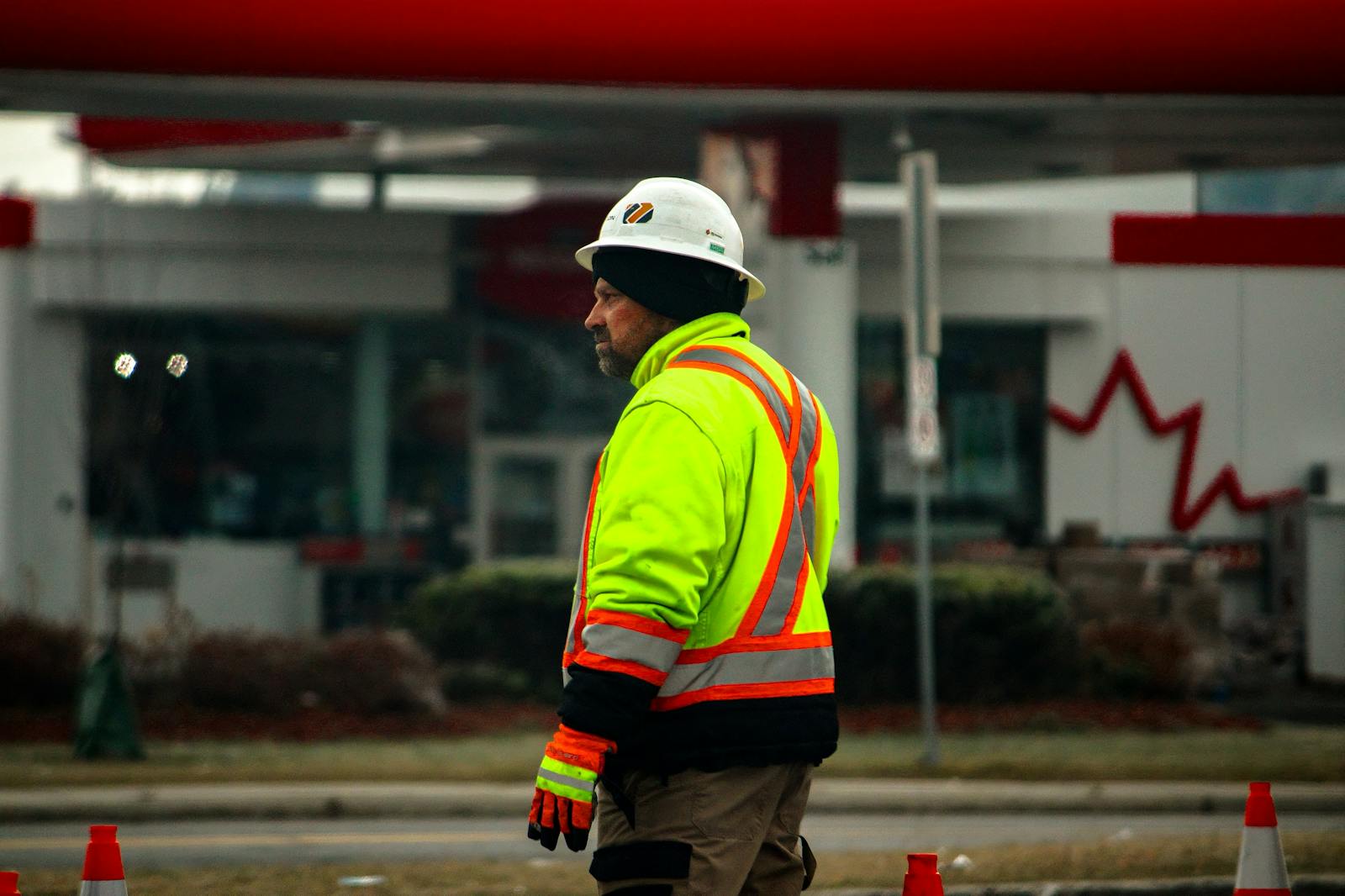
Most observation programs underperform not because workers do not want to report, but because reporting friction is too high and feedback loops are absent. Paper forms take too long. Digital forms require too many taps. Both demand vocabulary and taxonomy knowledge.
HaloEHS Observation removes the friction. A worker presses one button, describes what they see, and the AI handles transcription, classification, routing, and form-fill. The complete observation lands as structured data without the worker ever opening a form.
Six capabilities that turn observation from a paperwork burden into a working safety loop.
Press one button. Describe what you see in your own language. Speech-to-text plus EHS-trained NLP fills the form for you.
Hazard type, severity, location, and equipment extracted automatically from natural-language observations.
Configurable anonymity for environments where workers fear reprisal. Captures hazards that would never otherwise be reported.
Every observation routes to the right reviewer based on hazard type and location. No manual triage queue.
Works on any device. Captures observations offline and syncs automatically when connectivity returns.
AI surfaces clusters across location, equipment, and hazard type so patterns are visible before they become incidents.
Three failure modes recur across industries. The first is reporting friction: a four-page paper form does not fit into the seconds a frontline worker has between tasks. The hazard goes unreported. The second is the absence of feedback: workers who file reports and never hear anything back stop filing reports. The behaviour is rational. The third is blame culture: if a report can be used in a disciplinary action, workers stop filing them.
The combined effect is a program that looks active on paper but is missing the vast majority of what its workforce sees. The Heinrich Triangle (1931) puts the ratio at roughly 300 near-misses for every major injury. Most of those never enter any system.
The capture path is voice-first. The worker taps one button, speaks for ten to twenty seconds, and the AI pipeline handles the rest: transcription, classification, severity scoring, location extraction, and form auto-fill. The complete report is submitted in under thirty seconds without typing.
Reviewer routing is automatic. The system classifies the observation and sends it to the appropriate reviewer based on the operation's configured rules. The reporter sees the routing decision and an acknowledgement timestamp in their own feed within seconds.
Anonymous reporting is supported as an option, configurable per operation policy. Anonymous reports capture hazards that would never otherwise be reported, especially in environments where workers fear reprisal.
Every observation enters the same data layer as incidents, audits, and inspections. When an observation contains a serious hazard, it can be escalated into a full incident investigation with one click. The original observation remains linked as the source.
Patterns across observations feed recurrence detection. When multiple observations identify the same equipment, location, or hazard type, the system surfaces the cluster proactively. Investigators see the broader context, not just the single event in front of them.
A well-functioning observation program is visible in five operational metrics: active reporter ratio (workers who file at least one observation per month), median time-to-feedback (the gap between report and reviewer response), conversion rate from observation to action, leading-to-lagging ratio (observations per recordable incident), and recurrence-of-hazard rate. The first tracks engagement; the second whether workers feel heard; the third whether observations translate into real change; the fourth whether the program is genuinely upstream; the fifth whether the system is learning.
A common rule of thumb at maturity: at least one observation per worker per month, with at least 30 percent of observations triggering a downstream action. A 200-worker site should be capturing 200 or more observations a month; sites running under 10 percent active reporter ratio are not running an observation program, they are running a report-collection program.
HaloEHS surfaces these five metrics on a single dashboard updated in real time, broken down by site and by shift. The point is not the dashboard. The point is that a safety manager can answer in three seconds whether the program is healthy this month, which crews need attention, and which need a thank-you for raising hazards before injuries happened. That feedback loop is what turns observation programs from a paperwork exercise into a frontline-trusted system, and the data quality of every downstream module depends on it.
A safety observation is any unsafe condition, unsafe behaviour, near-miss, or hazard a worker notices during normal work. The defining feature is that it could have caused harm but did not — a frayed sling still in service, a colleague bypassing a guard, a spill on a walkway, a load that swung too close. Observations are the leading indicators of safety performance: research going back to the Heinrich and Bird studies shows that large numbers of minor unsafe conditions precede every serious injury. Capturing them while they are still harmless is what lets a safety program intervene before an incident occurs, rather than investigating after the fact. HaloEHS makes that capture fast enough that workers actually do it.
Yes, where your operation's policy permits it. Anonymous reporting is a deliberate option because the most valuable hazard reports are often the ones a worker would never file under their own name — unsafe practices involving a supervisor, pressure to skip a step to hit production, or anything where they fear reprisal. Allowing anonymity materially increases the volume of these high-signal reports. The trade-off is that a reviewer cannot go back to the reporter for clarification, so HaloEHS lets you decide per-site or per-report-type whether anonymity is allowed, balancing candor against the ability to follow up. Either way the observation enters the same workflow for review, classification, and action.
Yes. HaloEHS is a Progressive Web App, so observations can be captured with no connectivity and sync automatically the moment a signal returns. This matters because the places where hazards are most common — remote sites, basements, tank interiors, underground works, shielded plant areas — are exactly where mobile coverage is worst. A worker can record a voice note, attach a photo, and submit; the report queues locally and uploads later without any action from them. For on-premises or private-cloud deployments the same offline capability applies, syncing to your internal server when the device reconnects to your network.
Voice-first capture works in the worker's native language, which is essential on multilingual frontlines where requiring English would simply stop most workers from reporting. The worker speaks naturally; transcription preserves the original language, and the AI classification layer maps the meaning — hazard type, severity, location, equipment involved — into your operation's single normalized taxonomy. The safety team therefore reviews consistent, structured records regardless of which of the 20+ supported languages each report was filed in. You do not maintain separate forms or separate taxonomies per language, and you do not lose the safety-critical input from workers who are not comfortable writing in English.
When a reviewer determines that an observation describes an event with actual harm or significant near-miss potential, they escalate it to a full incident investigation in a single click. The original observation stays linked as the source record, so the chain from "what was first noticed" to "what was formally investigated" is preserved for auditors. The escalated investigation then flows into the structured frameworks in the Incident Management module — 5 Whys and PEEPO for root-cause analysis — and into automatic CAPA generation so corrective actions are tracked to verified closure. This connected path is what turns a stream of frontline observations into prevented incidents rather than a disconnected log.
Observation is included in every HaloEHS plan, including the free tier — there are no separate add-ons and no per-observation fees, because charging per report would directly discourage the high reporting volume the module is designed to produce. In the cloud SaaS model it is part of your subscription as you scale users and sites; in an on-premises or private-cloud deployment it is included in your enterprise licence. The right plan depends on your team size, number of sites, and which other modules you need, so book a demo for a tailored quote rather than a list price.
Typing kills frontline adoption. BLS data shows 2.8M US injuries in 2022, with underreporting studies saying the true count is higher. Voice fixes it.
Near-misses outnumber major injuries 300 to 1 (Heinrich, 1931). The reporting program that captures them prevents the next incident. Here is how to build one.
Spreadsheet-driven EHS programs miss patterns and fail audits. With US workplace injuries costing $58.5B/yr, the upgrade case is data-driven.
From first report to verified closure. AI-generated titles, 5 Whys and PEEPO investigation, CAPA generation, and recurrence detection across history.
Your command center for every CAPA across every module. Personalized task lists, automated reminders, evidence-based closure, and effectiveness tracking.