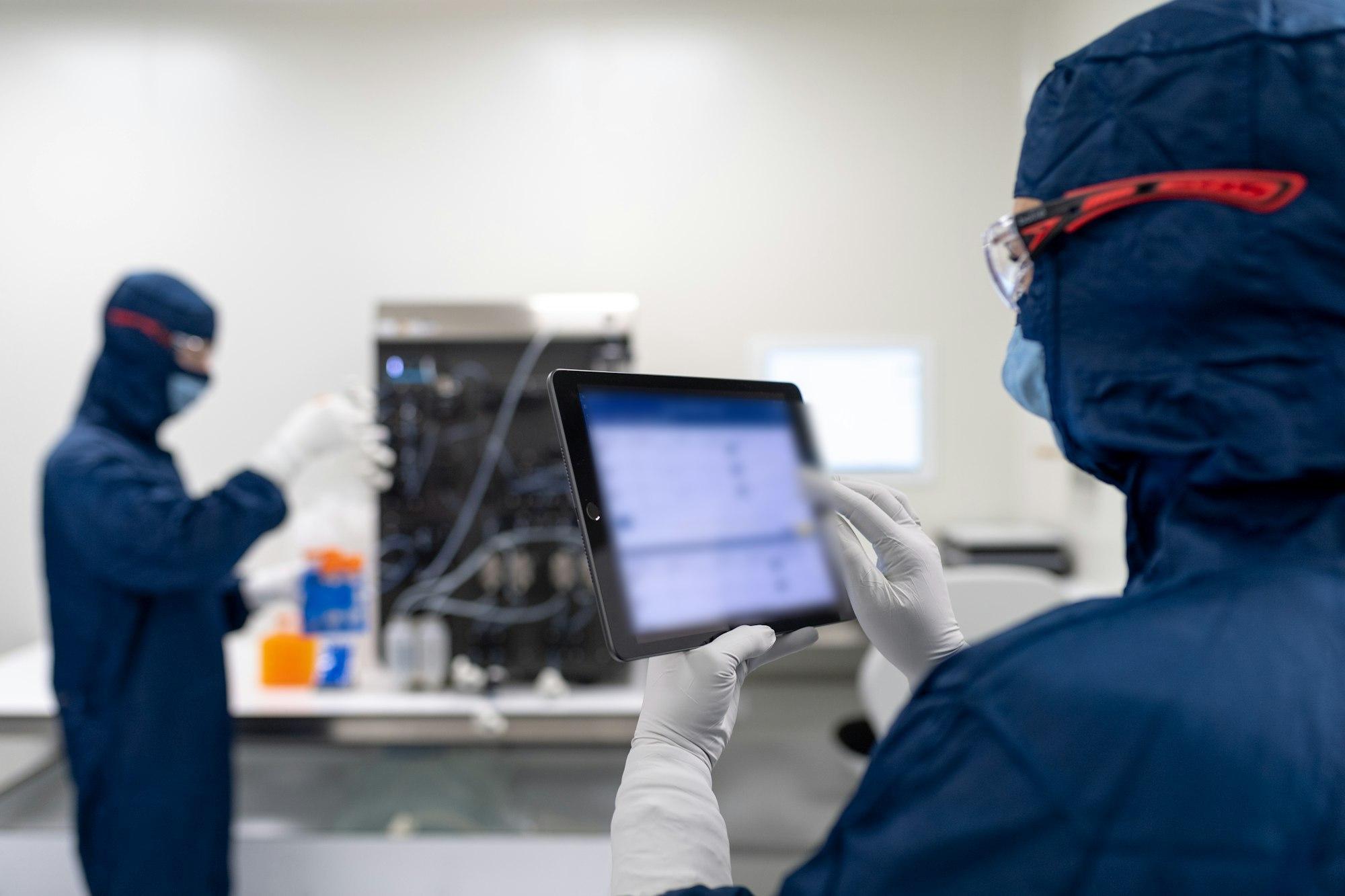
One platform. Every site. Every language.
The same workflows, permissions and records across all your business units. 10 modules sit on one data layer, so an observation can become an incident, an incident can raise a corrective action, and that action lands in the same inbox as everything else without anyone re-entering it.
One connected record
- Observation reported
- Escalated to an incident
- Corrective action raised
- Lands in My Tasks
- Verified and closed
The real screens, module by module
Live screenshots from a HaloEHS demo workspace. Personal details are blurred.
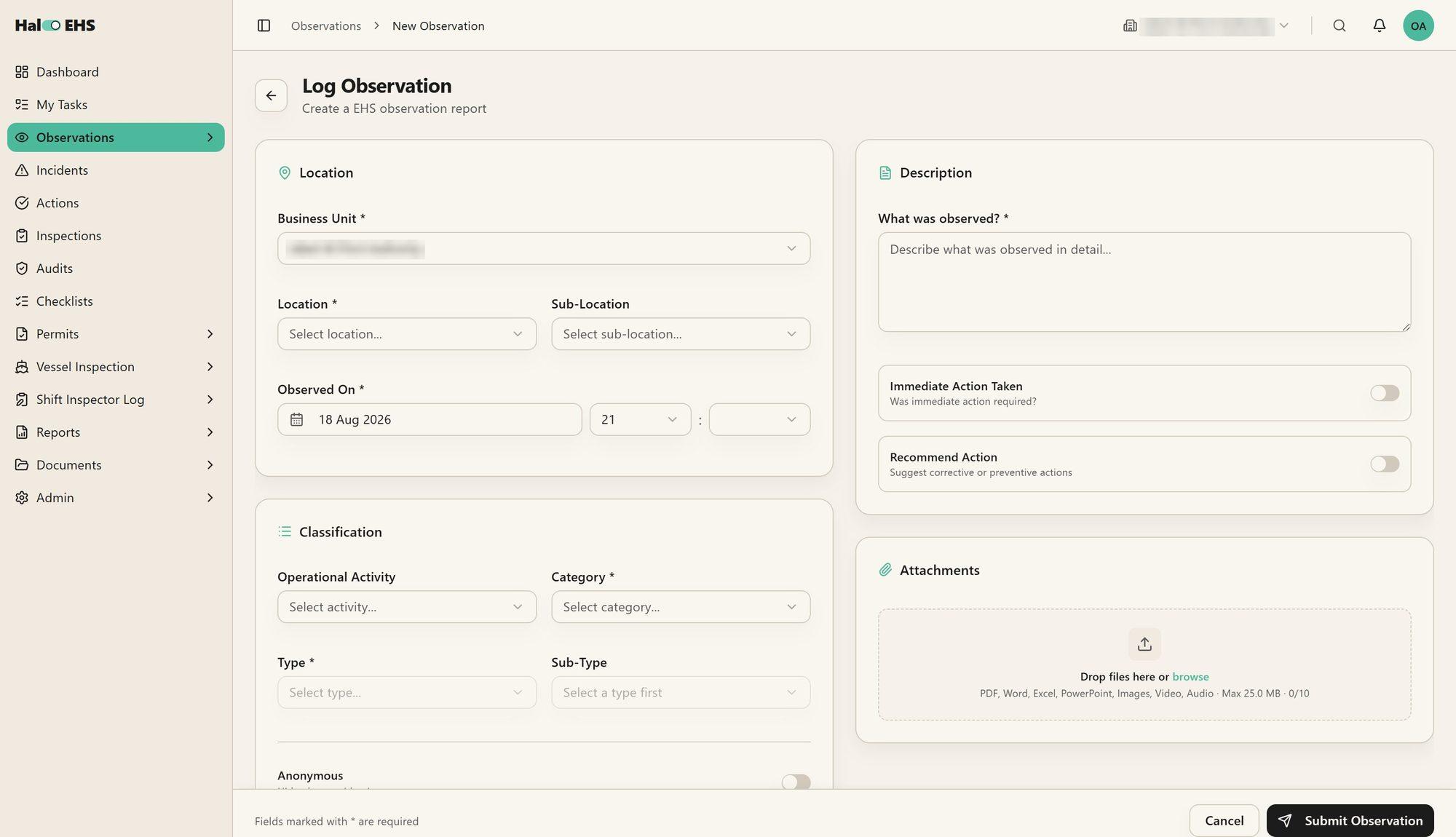
Observation report form with a live location map
10 modules. One data layer.
Licensing is per module and per seat. Start with what you need and switch on more later.
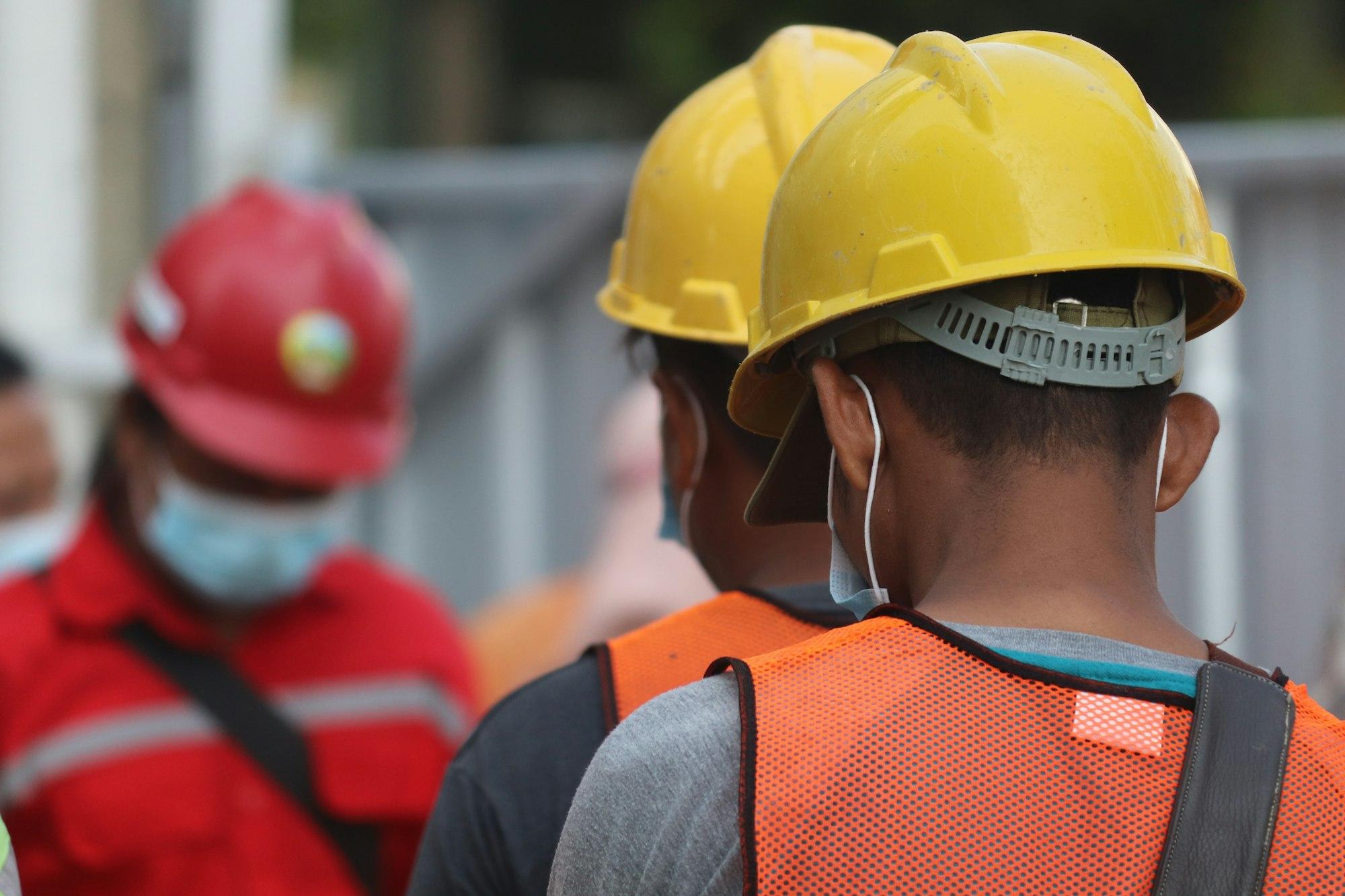
Safety Observations
Make reporting a hazard as easy as taking a photo.
Learn more
Incident Management
From first report to root cause, without losing the thread.
Learn more
Permit to Work
Control high-risk work from request to closure.
Learn more
Inspections & Audits
Turn checklists into accountable programs.
Learn more
Actions & CAPA
One task inbox where nothing gets lost.
Learn moreDocument Management
A controlled home for every controlled document.
Learn more
Marine & Shift Operations
Built for ports and terminals, not bolted on.
Learn more
Reporting & Analytics
Your safety meeting, pre-assembled.
Learn moreCapabilities that span every module you license.
Not per-module features repeated 10 times. One implementation every module plugs into, which is why adding a module does not mean adopting a second way of working.
- Dashboards & Analytics
The Monday meeting, already on screen.
Live KPIs on the home screen and per-module charts underneath them. Leading and lagging indicators sit together, so a rising near-miss count and a falling closure rate are visible in the same glance rather than in two different exports.- Home-screen KPIs
- Per-module dashboards
- Leading and lagging together
app.haloehs.com/observations/dashboard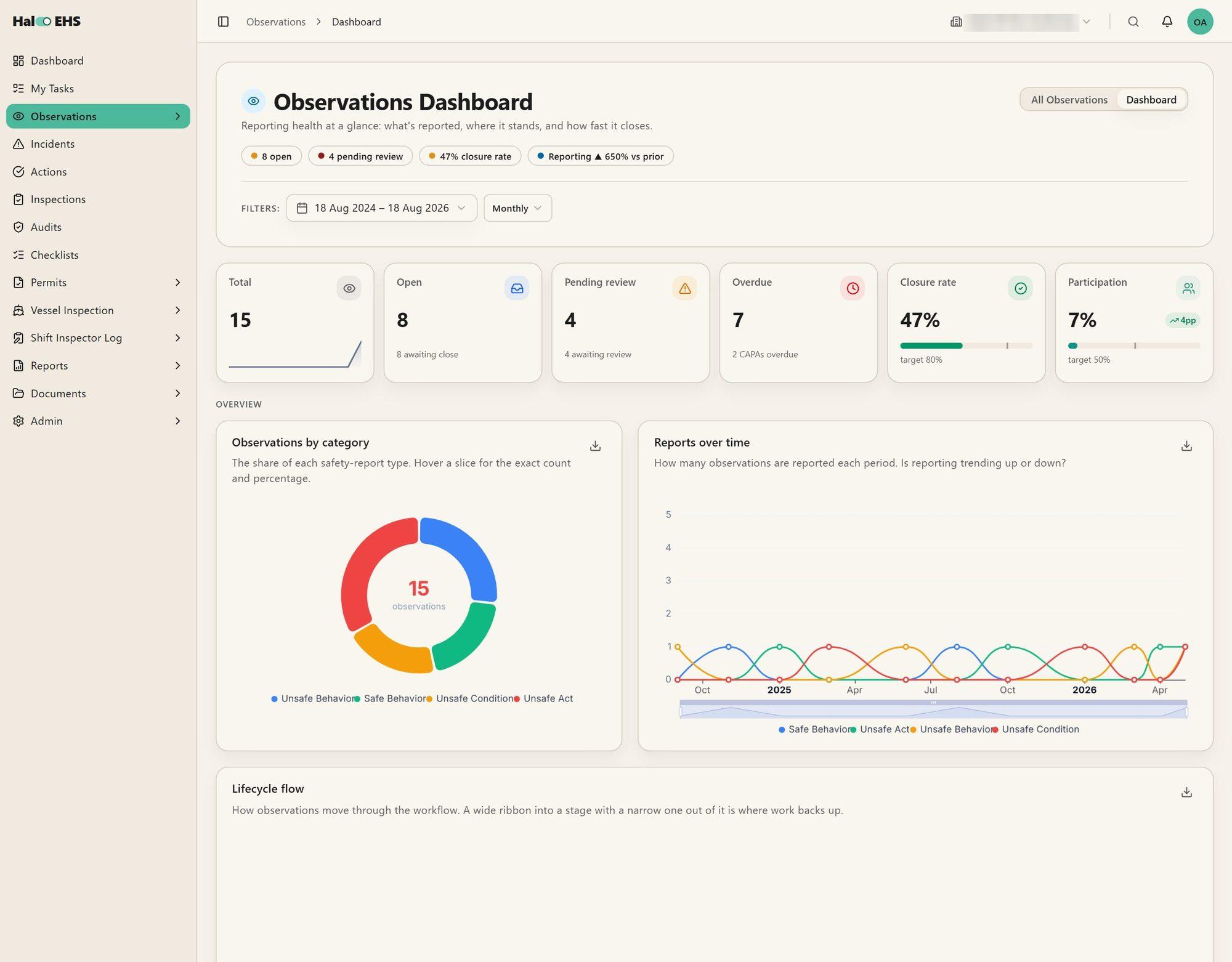
- Reporting Engine
Build a report once. Put it on a schedule.
Favourite a report, then schedule it. It is delivered as PDF or Excel to the people who need it, with run logs and automatic retry so a failed send is visible rather than silent.- Report builder
- Scheduled PDF and Excel
- Run logs with retry
app.haloehs.com/reports/scheduled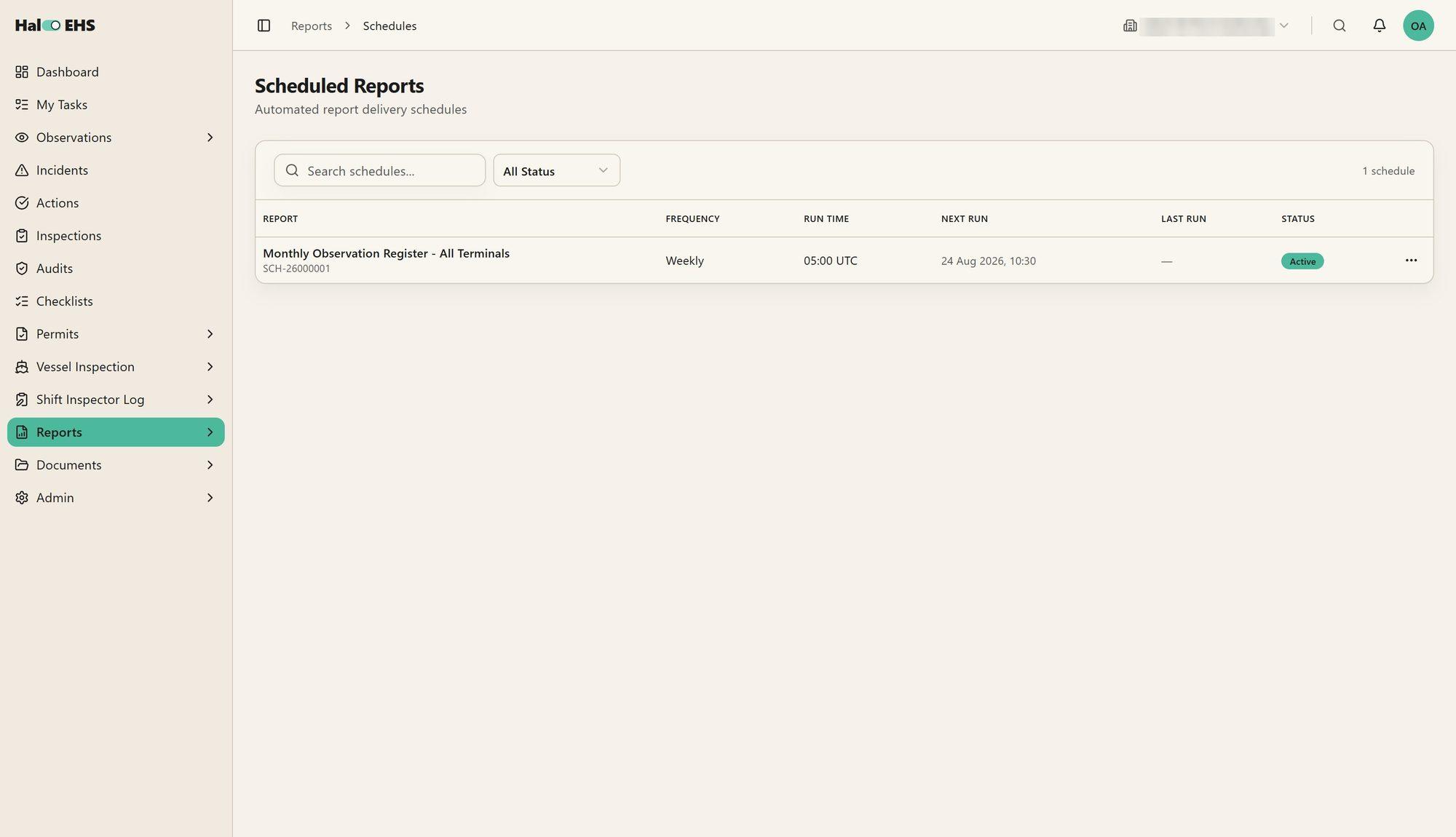
- Checklist Builder
One versioned template system for everything.
The same builder powers inspections, audits, permits and shift logs. Because templates are versioned, an audit completed last quarter still shows the questions that were actually asked, not the ones the template asks today.- Versioned templates
- Inspections, audits, permits, shift logs
app.haloehs.com/checklists/editor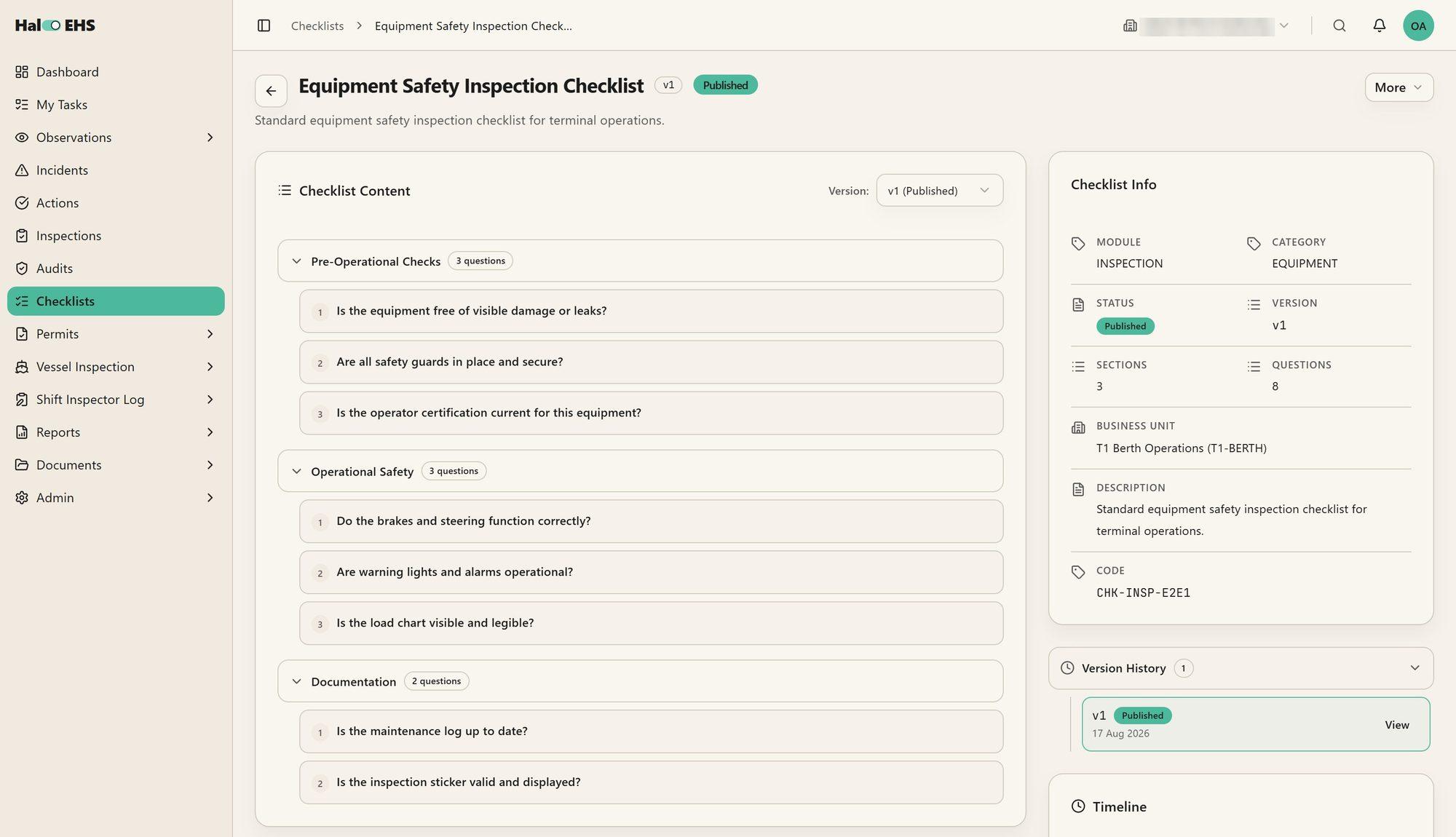
- My Tasks
Every assignment, from every module, in one inbox.
A corrective action from an incident, a finding from an audit and an acknowledgement on a document all queue in the same place. That is the difference between a task list people work and one they avoid.- Unified inbox
- Overdue tracking
- Assign, complete, verify
app.haloehs.com/my-tasks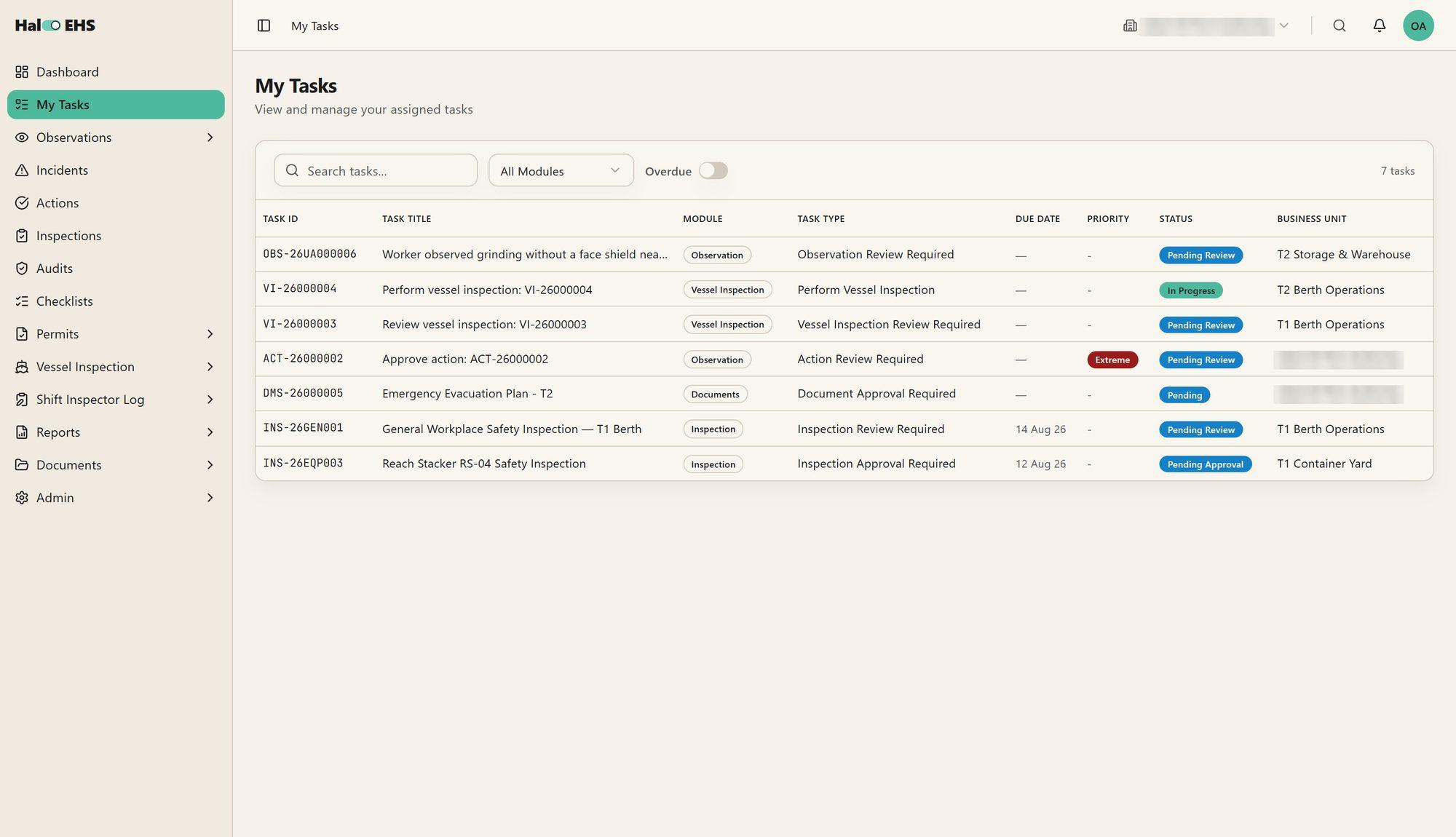
Built for organizations that answer to auditors.
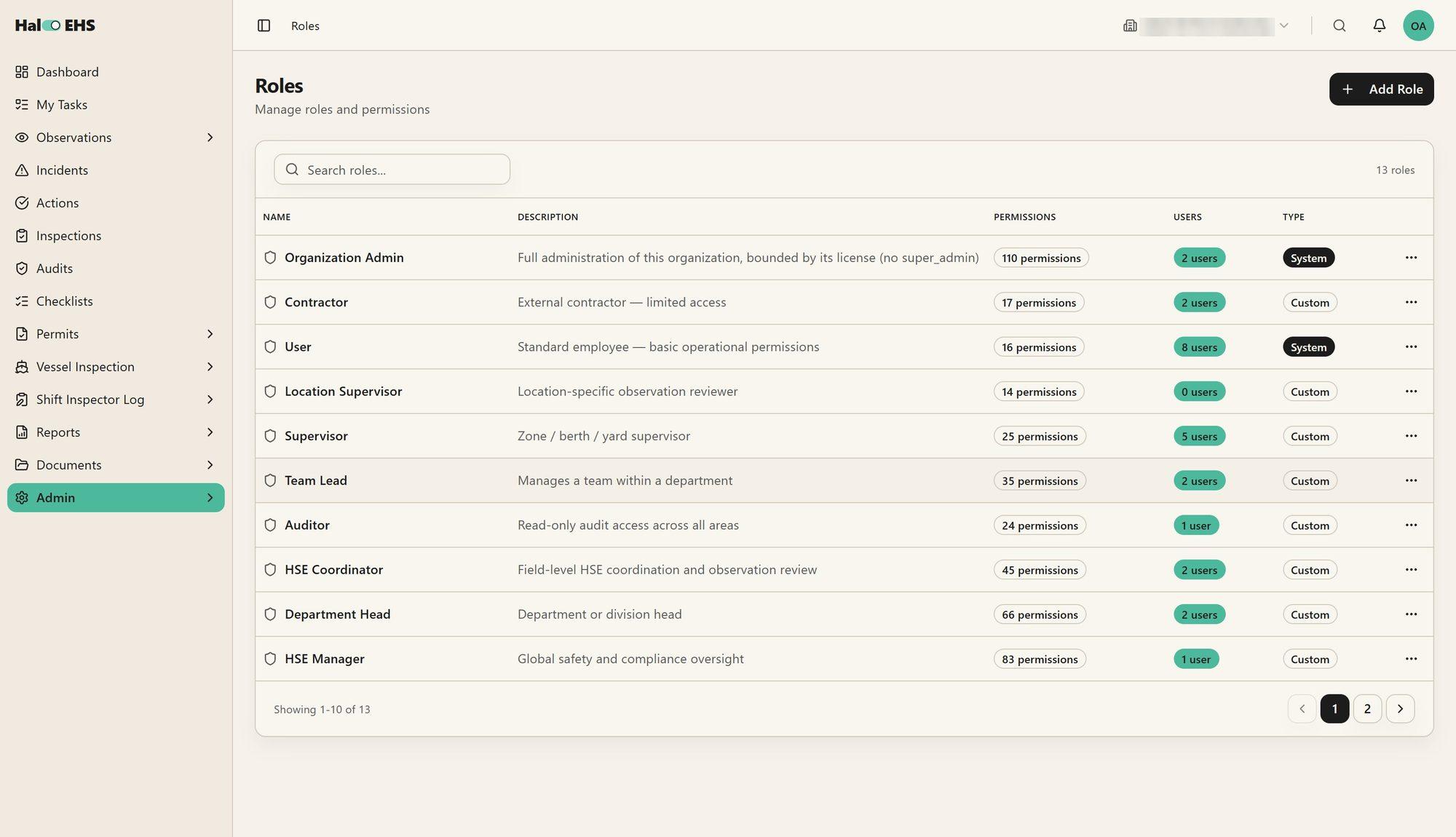
Access control and licensing
Role-based permissions reach individual actions, and a business-unit hierarchy scopes who sees which sites. Licensing is per module and per seat. All three are enforced on the server on every request, not by hiding menu items in the interface.
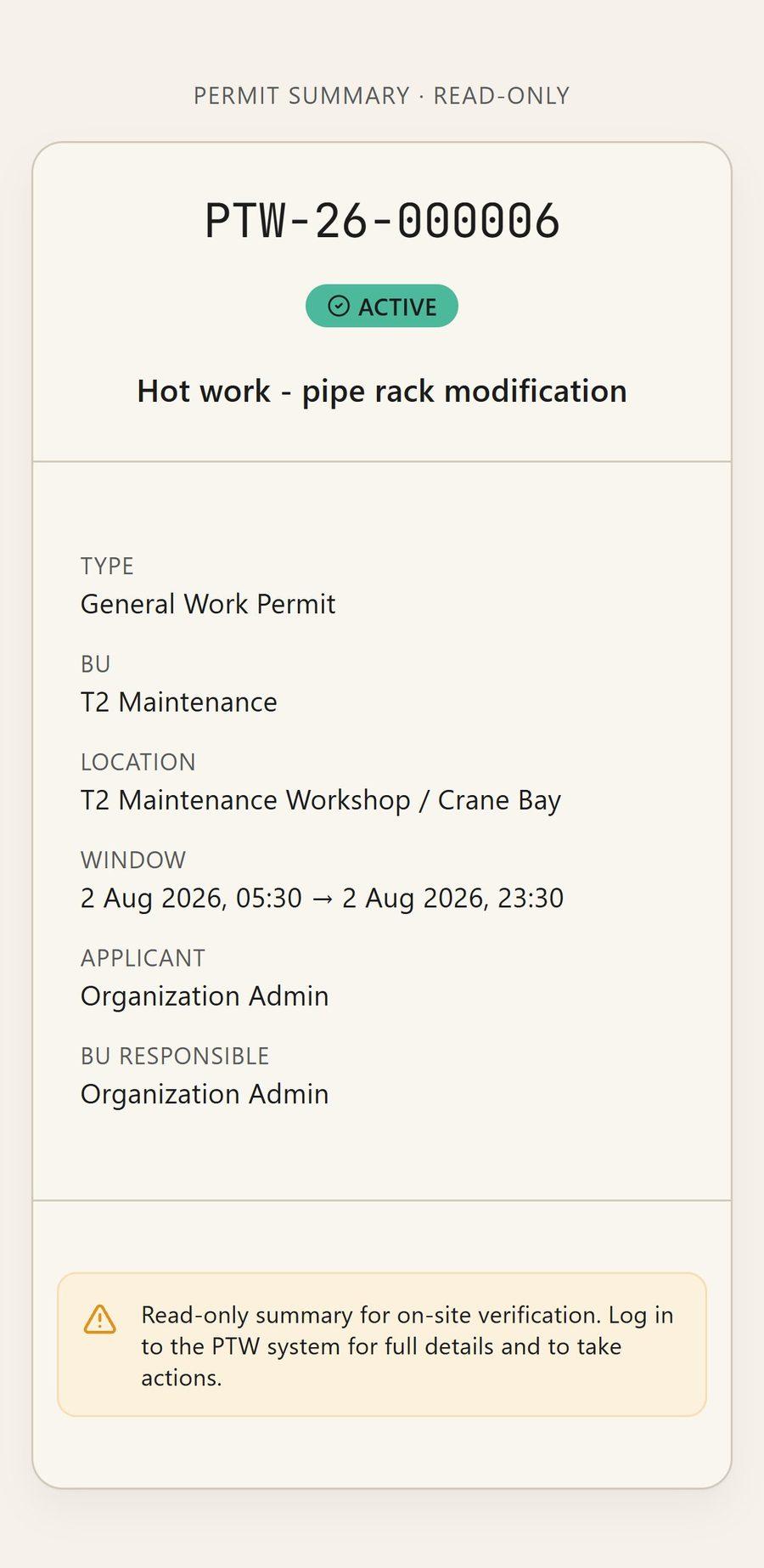
Permit record
- Draft
- Submit
- Review
- Approve
- Acknowledge
Append-only. Every entry keeps who, when and on whose authority.
Records and e-signatures
Signatures are anchored to workflow states, so a signature is tied to the specific transition it approved. Logins and permission changes go to append-only audit trails, and permits, inspections and audits generate system PDF records.
Tenancy you can trust
Every request is scoped to your organization, so one customer's records are never reachable from another's session. Access tokens are short-lived, refresh tokens are HttpOnly, and rate limiting and bot protection sit at the edge.
Read about securitySafety reporting works best in your own language.
Reporting depends on people describing what they saw. A workforce forced into a second language reports less, and less precisely. The interface follows the reporter while the underlying record stays consistent for everyone reviewing it.
- EnglishEnglish
- हिन्दीHindi
- தமிழ்Tamil
- മലയാളംMalayalam
- ಕನ್ನಡKannada
- العربيةArabic
Arabic runs with full right-to-left layout, not a mirrored afterthought.
AI that assists. People who decide.
Every suggestion stays a suggestion: a person reviews and confirms every record, and the AI never submits or approves anything.
Suggested titles
Observations and incidents get a drafted title from the description, so a report filed in thirty seconds still reads clearly in the queue a week later.
Risk category prediction
The likely risk category is proposed at capture, which speeds triage and keeps classification consistent between reporters who would categorise differently.
Recurrence detection
Incidents that resemble earlier ones are flagged, so a reviewer sees the pattern while it is still three events rather than thirty.

See your operation in HaloEHS.
We will set the demo up around your sites, your business units and your language, not a canned dataset.